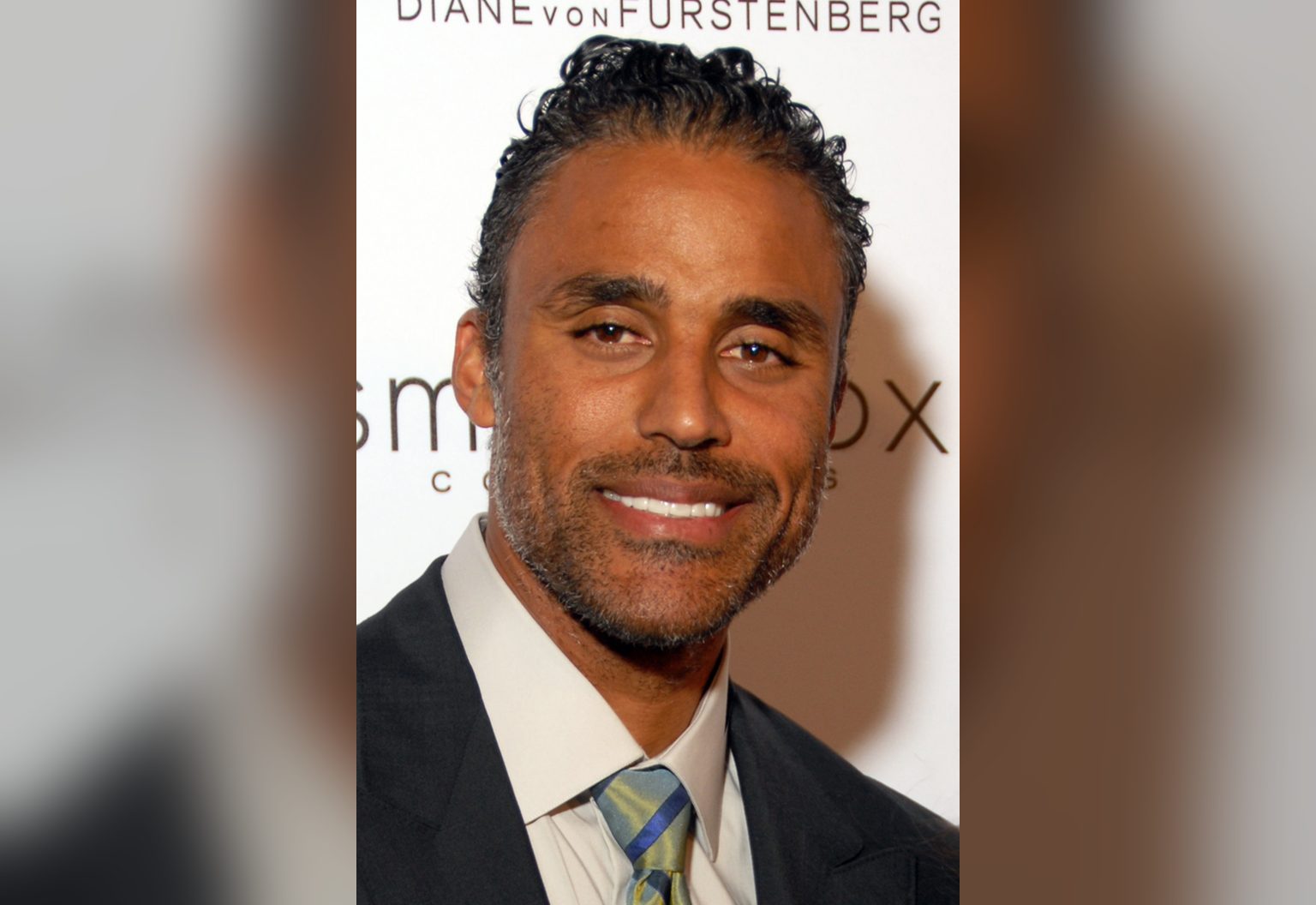
Three championship rings came from Los Angeles, but Rick Fox learned NBA basketball in Boston, where he started his first game as a rookie. Over 13 seasons, the 6-foot-7 forward went from a young Celtic finding his place to a dependable starter alongside Shaquille O’Neal and Kobe Bryant.
His career also stretched beyond the usual boundaries of a basketball biography. He studied broadcasting at North Carolina, began acting while still playing professionally and later entered esports through an interest he shared with his son. The move from the court to the screen was less a reinvention than a second career already taking shape.
From Toronto to the Bahamas-and Indiana
Born Ulrich Alexander Fox in Toronto on July 24, 1969, he grew up in the Bahamas. His father, Ulrich, was Bahamian; his mother, Dianne Gerace, represented Canada in the high jump and pentathlon at the 1964 Tokyo Olympics.
Sport was therefore familiar territory at home, although basketball became his own route. He attended Kingsway Academy in Nassau before moving to Warsaw Community High School in Indiana, trading the Bahamas for a state where high school basketball commanded considerable attention.
Those moves explain the different places attached to his name. Toronto was his birthplace, the Bahamas shaped his childhood, and the United States provided his college and professional opportunities. A Bahamian-Canadian, he later represented Canada at the 1990 and 1994 FIBA World Championships.
Four years at North Carolina
Fox arrived at the University of North Carolina in 1987 and spent four seasons playing for Dean Smith. He also studied radio, television and motion pictures-a choice that would become more than a footnote once acting entered his working life.
On the court, his development culminated in a productive senior season. In 1991, he earned first-team All-ACC honors, was named ACC Tournament MVP and helped the Tar Heels reach the NCAA Final Four.
He left with 197 steals and 140 appearances, both school records at the time. The steals reflected his anticipation and defensive activity; the appearances spoke to four years of sustained involvement in one of college basketball’s most demanding programs.
Boston selected him with the 24th overall pick in the 1991 NBA Draft. He was joining a franchise near the end of its Larry Bird era, rather than one offering a settled path back to championship contention.
Boston: an immediate opportunity, then a larger role
Fox did not have to wait long for meaningful minutes. He became the first Celtics rookie to start on opening night since Bird in 1979.
Wearing No. 44, he averaged 8.0 points in 1991-92 and earned NBA All-Rookie Second Team recognition. For a late first-round selection, it was a solid entrance: a place in the rotation, an early starting assignment and evidence that his all-around college game could translate.
His six Boston seasons unfolded during a difficult transition for the franchise. Bird retired in 1992, and the Celtics gradually moved further from the championship teams that had defined the previous decade.
As the roster changed, Fox took on more responsibility. By 1996-97, he was averaging a career-high 15.4 points, along with 5.2 rebounds and 3.8 assists. Boston finished that season 15-67, so his strongest individual scoring year came with little team success.
The Celtics released him in 1997. He signed with the Lakers that August, moving from a rebuilding team to one built around O’Neal and a young Bryant.
Los Angeles: finding his place on a championship team
In Los Angeles, Fox switched to No. 17 and averaged 12.0 points during the 1997-98 regular season. He could score when needed, but his longer-term value lay in doing several jobs without needing the offense organized around him.
The Lakers were not immediately champions. They lost to Utah in the 1998 Western Conference finals and were swept by San Antonio in the second round the following year. Phil Jackson’s arrival as head coach in 1999 helped turn a talented roster into a more coherent team.
The breakthrough came in 2000, when Los Angeles defeated Indiana in six games to win the NBA title. Fox contributed from the bench during that playoff run, with Glen Rice occupying the starting small-forward role.
After Rice departed, Fox became the regular starter. In 2000-01, he averaged 9.6 points, 4.0 rebounds and 3.2 assists. The Lakers then went 15-1 in the playoffs, beating Philadelphia in the Finals.
A third consecutive championship followed in 2002 with a sweep of the New Jersey Nets. Fox started all 19 games of that postseason. His assignment was not to match the scoring of the two stars beside him; it was to defend opposing wings, move the ball and make opponents pay for leaving him open.
Los Angeles returned to the Finals in 2004 but lost to Detroit. That August, the Lakers traded Fox and Gary Payton to Boston in a deal involving Chucky Atkins, Jumaine Jones and Chris Mihm. Fox retired before playing another game for the Celtics.
He had played six seasons in Boston and seven in Los Angeles.
What his game brought to the floor
Fox’s work was often easiest to notice when a possession became awkward. He could make the extra pass, use his size against a smaller defender or take a difficult defensive assignment without requiring a bigger scoring role in return.
At 6-foot-7 and roughly 230 pounds, he brought strength to the small-forward position. He was a willing, physical defender and a capable passer, while his outside shooting gave teammates space to operate.
Across 930 regular-season games, he averaged 9.6 points, 3.8 rebounds and 2.8 assists. He shot 45.0 percent from the field, 34.9 percent from three-point range and 77.0 percent at the foul line.
Those numbers describe a useful all-around player. The contrast between his final Boston season and his championship years adds the context: he could carry more offense, but in Los Angeles he accepted a narrower assignment on a much stronger team.
Acting was already part of the schedule
Retirement did not mark the beginning of his screen career. Fox appeared in Blue Chips in 1994 and Eddie in 1996 while still an NBA player.
His recurring role as imprisoned basketball player Jackson Vahue in HBO’s Oz began in 1997. He also appeared in Spike Lee’s He Got Game in 1998. Acting and basketball overlapped for years, making his North Carolina studies look like practical preparation rather than an unrelated academic interest.
After leaving the league, his credits expanded to include One Tree Hill, The Game, Ugly Betty and Greenleaf. He also competed on Dancing with the Stars in 2010.
Family, gaming and business beyond basketball
Fox has two children: Kyle, born in 1994, from his relationship with Kari Hillsman, and Sasha Gabriella, born in 2000, from his marriage to singer and actress Vanessa Williams. Fox and Williams married in 1999 and later divorced.
His son’s interest in video games helped introduce him to competitive gaming. In 2015, he acquired a professional League of Legends team and launched Echo Fox, entering an industry with its own rosters, supporters and competitive pressures. His involvement with the organization ended in 2019.
Other ventures have included the game developer HiDef and production work through 1744 Entertainment.
His connection to the Bahamas also remained active. Following Hurricane Dorian in 2019, he participated in relief and rebuilding efforts. He later co-founded Partanna, a building-materials business that describes its technology as carbon-negative. That environmental claim belongs to the company and should not be confused with an independently established assessment of every product or project.
The range is unusual: professional basketball, television sets, esports and construction materials. Each became a distinct part of his working life, rather than simply an endorsement attached to his playing days.
FAQ
How many NBA championships did Rick Fox win?
He won three consecutive championships with the Los Angeles Lakers in 2000, 2001 and 2002.
Which NBA teams did he play for?
He played for the Boston Celtics from 1991 to 1997 and the Lakers from 1997 to 2004. He was traded back to Boston in 2004 but retired without playing another game.
What is Rick Fox’s nationality?
He is Bahamian-Canadian. He was born in Toronto, grew up in the Bahamas and represented Canada internationally.
What were his NBA career averages?
Over 930 regular-season games, he averaged 9.6 points, 3.8 rebounds and 2.8 assists.
Did he act while playing in the NBA?
Yes. His playing career overlapped with appearances in Blue Chips, Eddie, Oz and He Got Game.
Who are his children?
His son is Kyle Fox, whose mother is Kari Hillsman. His daughter is Sasha Gabriella Fox, whose mother is Vanessa Williams.
Photo: Toglenn, CC BY-SA 3.0, via Wikimedia Commons