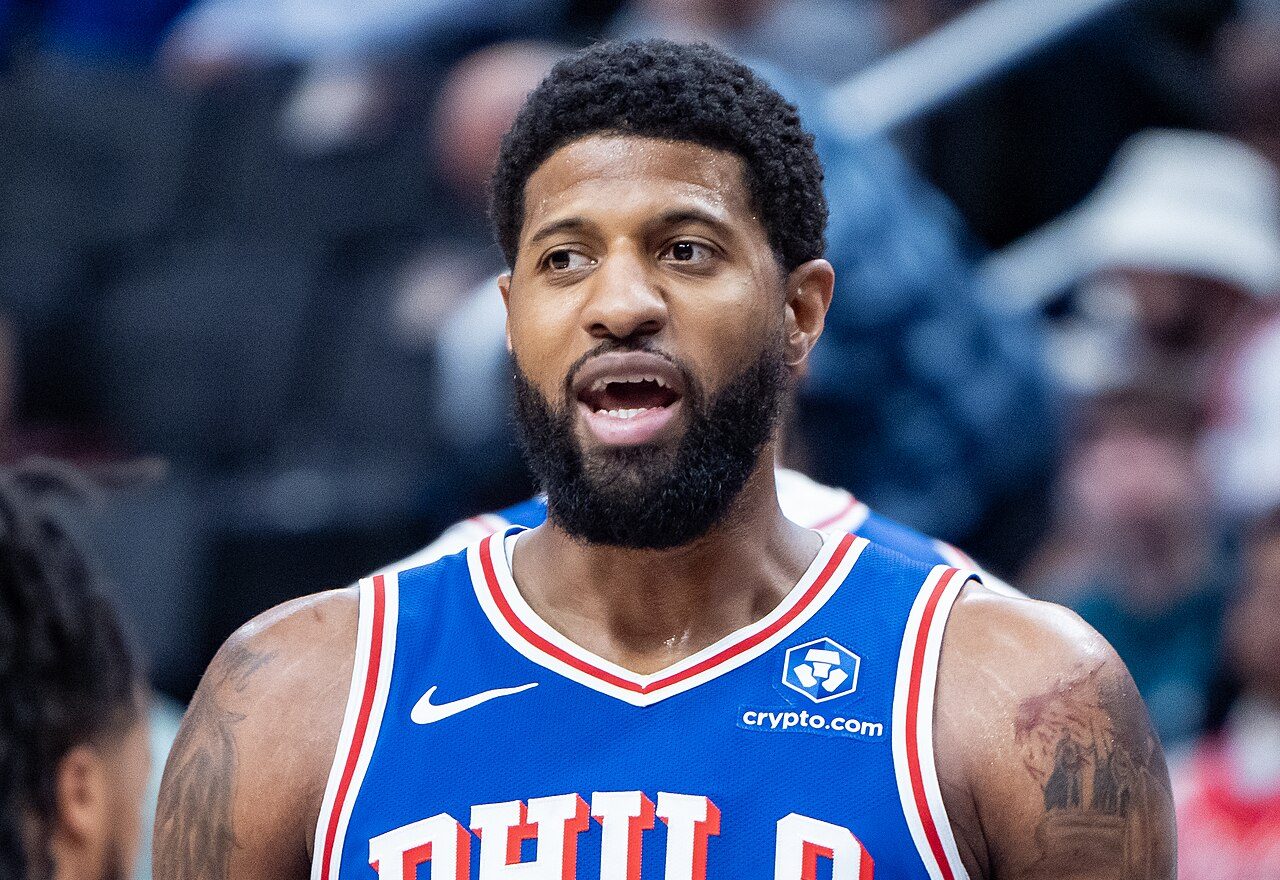
Two numbers still frame Paul George’s career better than any slogan: 10th overall in the 2010 NBA Draft, and nine All-Star selections after that. The path between those points was anything but straight. It ran from Palmdale to Fresno, through deep playoff runs in Indiana, a devastating leg injury with Team USA, a scoring peak in Oklahoma City, and the constant glare that follows a star wing expected to deliver in May and June.
From Palmdale to a late-blooming prospect
Paul Clifton Anthony George was born on May 2, 1990, in Palmdale, California. Sports were part of the household. His father, Paul George Sr., and mother, Paulette, raised three children, and athletics ran through the family: sister Teiosha played basketball at Pepperdine, while sister Portala played volleyball at Cal State San Bernardino.
He grew up admiring Kobe Bryant and following both Los Angeles teams, the Lakers and the Clippers. That Southern California basketball culture shaped him early, but he was not treated as a can’t-miss prodigy. At Knight High School in Palmdale, he developed more gradually than some elite recruits. By his senior year, though, his length, fluidity and defensive instincts were harder to miss. He led Knight to a Golden League title and was named league MVP, the clearest sign yet that his game was catching up to his tools.
Fresno State gave him a runway
George stayed close to home and enrolled at Fresno State, where he played two seasons from 2008 to 2010. He was not arriving with one-and-done celebrity, and that mattered. Fresno gave him room to expand his game without the noise that follows blue-chip freshmen at bigger programs.
By his second season, he had become a serious NBA prospect. He earned All-WAC second-team honors in 2010, showing the outline of the player he would become: a long wing who could handle the ball, score in different ways and make plays defensively. Years later, Fresno State retired his No. 24 jersey, a lasting nod to how much those two seasons meant to the program.
In the 2010 NBA Draft, the Indiana Pacers selected him with the 10th pick.
Indiana turned potential into stardom
George entered the league as a raw but intriguing wing. He made the NBA All-Rookie Second Team in 2011, but his first seasons in Indiana were more about growth than instant stardom. Then the leap came.
The 2012-13 season changed his place in the league. He averaged 17.4 points, 7.6 rebounds and 4.1 assists, made his first All-Star team, won Most Improved Player, and helped push the Pacers into the Eastern Conference elite. Indiana reached back-to-back conference finals in 2013 and 2014, and George became the face of a team built to challenge LeBron James’ Miami Heat.
That version of the Pacers suited him. He could defend the opponent’s best wing, run in transition, score off the catch or off the dribble, and stretch the floor without needing every possession built around him. He made All-Defensive teams, earned All-NBA recognition, and grew into one of the NBA’s most complete perimeter players.
His best scoring season in Indiana came in 2016-17, when he averaged 23.7 points, 6.6 rebounds and 3.3 assists. By then, he had already switched from No. 24 to No. 13, embracing the “PG-13” nickname that followed him for the rest of his career.
The injury that could have changed everything
In August 2014, during a USA Basketball scrimmage in Las Vegas, George suffered one of the most gruesome injuries of his era: an open fracture of the tibia and fibula in his right leg.
For a player whose game relied on rhythm, lift and lateral movement, it was a brutal interruption. The question was not whether he could play again. It was whether he could still be Paul George.
He returned late in the 2014-15 season, then worked his way back to All-Star level. That comeback remains one of the central facts of his career. Plenty of players return from major injuries. Far fewer return to become elite on both ends again.
Oklahoma City brought his statistical peak
In July 2017, Indiana traded George to the Oklahoma City Thunder. The move paired him with Russell Westbrook and gave him a fresh stage in the Western Conference.
His second season there, 2018-19, was arguably the finest regular season of his career. He averaged 28.0 points, 8.2 rebounds, 4.1 assists and a league-leading 2.2 steals per game. He finished third in MVP voting, made All-NBA First Team, and earned All-Defensive First Team honors.
That season captured the full version of his game. He could rise into pull-up threes, attack closeouts, finish above the rim, and erase actions defensively with his reach and timing. When people describe Paul George as a two-way wing, that Thunder season is usually the clearest evidence.
Homecoming with the Clippers, and the noise that followed
In July 2019, George was traded to the Los Angeles Clippers, a blockbuster move that sent him back to his home state. For someone who had grown up following the franchise, it was a meaningful return. It also came with enormous expectations, because the Clippers were built to contend immediately.
His years in Los Angeles were productive, if uneven in public perception. He made All-Star teams in 2021, 2023 and 2024, and in 2020-21 he averaged 23.3 points, 6.6 rebounds and 5.2 assists while shooting a career-best 41.1 percent from three. That postseason mattered too: after a rough 2020 playoff run in the Orlando bubble, he responded with a stronger 2021 campaign and helped the Clippers reach the Western Conference finals for the first time in franchise history.
Still, the scrutiny never really left. George had dubbed himself “Playoff P” in Oklahoma City, and when his postseason performances dipped, critics seized on it. Mocking labels such as “Pandemic P” and “Wayoff P” circulated widely online and on television, especially after the 2020 playoffs. Those nicknames were part of the public conversation, but they also flattened the record. The fuller picture is that he remained a high-level player for the Clippers, even while injuries and playoff inconsistency shaped the outside narrative.
In December 2020, he signed a four-year contract extension with the Clippers worth about $176.3 million.
Philadelphia, then the limits of certainty
George left the Clippers in free agency and signed with the Philadelphia 76ers in July 2024. That move is well established. Beyond that point, caution matters.
Some online biographies and database entries have listed later team changes and future-season statistics, including claims linking him to the Boston Celtics. Those details are not reliable enough to present as settled fact here without stronger sourcing. What can be said clearly is that Paul George played for the Indiana Pacers, Oklahoma City Thunder, Los Angeles Clippers and Philadelphia 76ers during his NBA career.
Team USA and an Olympic gold medal
His international résumé is shorter than his NBA one, but it includes a major line: Olympic gold. George was part of the United States team that won the men’s basketball tournament at the 2016 Rio Olympics.
That medal carries extra weight in his story because it came after the 2014 leg injury he suffered while in the national-team setup. Returning to represent Team USA on the Olympic stage was its own kind of answer.
What made his game work
At his best, George played with a rare kind of balance. He was not just a scorer who happened to defend, or a defender who could chip in points. He could do both at a high level.
Offensively, he thrived as a shot-maker from the wing. He could pull up off ball screens, work into mid-range jumpers, spot up from deep, and use long strides to get to the rim. Defensively, his value came from versatility. At 6-foot-8 with length and quick hands, he could check guards, wings and some forwards, disrupt passing lanes and turn defense into transition offense.
That complete skill set is why he spent so many years in the All-NBA and All-Defensive conversation. It is also why coaches trusted him in so many different roles, from primary scorer to secondary creator to matchup stopper.
Off the court: family, business and public image
Away from basketball, George has generally kept family life visible but measured. He married Daniela Rajic in 2022, and the couple have children together. His family background has always been part of the story, too, not as branding but as context: a sports-minded home, two athletic sisters, and a California upbringing that shaped both his game and his ambitions.
Commercially, he built one of the stronger sneaker identities of his generation through Nike. His signature line, including models such as the Nike PG 6, helped make him a recognizable figure well beyond box scores.
As for the internet-era extras that attach themselves to star players, some deserve distance. One recurring claim online has suggested that he grew after entering the NBA and was closer to 6-foot-10 than his listed height. That remains rumor, not established fact.
The same goes for the many labels attached to him over time. “PG-13” stuck because it fit naturally. “Playoff P” was self-created. Others were products of criticism, meme culture and the way modern stars are discussed in public. They tell you something about how George was seen, but less about how he actually played.
Honors that define the résumé
George’s record is deep even without an NBA championship. He was selected to nine All-Star Games: 2013, 2014, 2016, 2017, 2018, 2019, 2021, 2023 and 2024. He won Most Improved Player in 2013, made the All-Rookie Second Team in 2011, earned All-NBA First Team in 2019, and was named to multiple All-Defensive teams. He also led the league in steals in 2018-19.
That résumé explains why he stayed relevant for so long. He was not a brief peak or a one-dimensional scorer. For more than a decade, Paul George was one of the NBA’s defining two-way wings.
FAQ
How old is Paul George?
He was born on May 2, 1990.
What teams has Paul George played for?
He has played for the Indiana Pacers, Oklahoma City Thunder, Los Angeles Clippers and Philadelphia 76ers.
Did Paul George win an Olympic medal?
Yes. He won gold with Team USA at the 2016 Rio Olympics.
What college did Paul George attend?
He played two seasons at Fresno State from 2008 to 2010.
What was Paul George’s major injury?
He suffered an open fracture of the right tibia and fibula during a USA Basketball scrimmage in 2014.
What is Paul George’s best-known nickname?
“PG-13” is the nickname most closely associated with him.
Photo: Chensiyuan, CC BY-SA 4.0, via Wikimedia Commons