Before basketball took over, Rui Hachimura was a pitcher and catcher. Even his first name came from the baseball diamond: his grandfather chose “Rui,” written with the Japanese character for “base.”
That childhood in Toyama eventually led to Gonzaga, the ninth pick in the 2019 NBA Draft and a prominent role with Japan’s national team. The route was unusual, but his NBA place rested on recognizable basketball skills: strength around the basket, a comfortable mid-range jumper and the ability to punish a smaller defender.
From Toyama to Japan’s national stage
Born on February 8, 1998, in Toyama Prefecture, Hachimura has a Japanese mother and a Beninese father. Baseball was his first sporting interest; basketball became his focus in junior high school.
At Meisei High School in Sendai, his development accelerated. He helped the school win three consecutive All-Japan High School Tournament titles from 2013 through 2015, becoming one of the country’s most closely watched young players.
International competition offered a different measuring stick. He helped Japan win bronze at the 2013 FIBA Asia Under-16 Championship, then averaged 22.6 points at the 2014 FIBA Under-17 World Championship. Japan struggled against stronger teams, but its young forward showed he could score against players beyond the domestic school circuit.
His size attracted attention. What made the next step possible was the prospect of developing that size into a broader offensive game.
Gonzaga offered that opportunity-and a considerable adjustment. Moving to Spokane meant learning a new language, a different style of basketball and the daily expectations of a major American college program.
Gonzaga: learning first, then leading
Hachimura arrived at Gonzaga in 2016. His first season required patience: he appeared in 28 games, averaged 2.6 points and watched an experienced team make the program’s first national championship game.
During that run, he became the first Japanese national to appear in the NCAA Division I men’s tournament. It was a meaningful milestone, though his place in the rotation remained small.
That changed in his sophomore season. Coming off the bench, he averaged 11.6 points and began showing the combination that would define his college career: powerful drives, touch in the lane and jump shots taken without much wasted movement.
By his junior year, he was central to Gonzaga’s offense.
At the 2018 Maui Invitational, he earned tournament MVP honors as the Bulldogs won the title, beating Duke 89-87 in the final. Against a heavily scrutinized opponent, Hachimura scored 20 points and helped Gonzaga withstand a late comeback.
He finished the 2018-19 season averaging 19.7 points and 6.5 rebounds while shooting 59.1 percent from the field. The honors followed: West Coast Conference Player of the Year, consensus first-team All-American and the Julius Erving Award as the nation’s leading small forward.
After three seasons, he entered the NBA Draft with more than an intriguing background. He had a substantial body of work against high-level college competition.
Washington makes the call
On June 20, 2019, the Washington Wizards selected Rui Hachimura ninth overall. He became the first Japanese player taken in the NBA Draft’s first round.
Washington gave him responsibility immediately. He started all 48 games he played as a rookie, averaging 13.5 points, 6.1 rebounds and 1.8 assists in the disrupted 2019-20 season. Those performances earned him NBA All-Rookie Second Team recognition.
His scoring translated more quickly than some other parts of his game. He could hold his ground against NBA forwards, finish through contact and find comfortable shots inside the three-point line. Defensive positioning and quick decisions within a team offense required more work.
Availability also shaped his Washington years. A groin injury interrupted his rookie season, and he missed the beginning of the 2021-22 campaign for personal reasons before returning in January. The details of that absence remained private.
Across parts of four seasons with the Wizards, he moved between starting and reserve roles. His shooting range expanded, but a permanent place in Washington’s plans never quite settled.
A new role with the Lakers
On January 23, 2023, Washington traded Hachimura to the Los Angeles Lakers for Kendrick Nunn and three second-round draft picks.
The move placed him alongside LeBron James and Anthony Davis, with less need to create every opportunity himself. His job was more specific: finish possessions, make open shots and provide size on the wing.
His first Lakers postseason quickly demonstrated the value of that role.
In Game 1 against Memphis on April 16, 2023, he scored 29 points off the bench, making five of six three-point attempts. The Lakers won 128-112, and his shooting helped turn the series opener in their favor.
He averaged 12.2 points during that playoff run as Los Angeles reached the Western Conference finals. The Lakers then re-signed him to a three-year, $51 million contract in July 2023.
That December, he was part of the team that won the inaugural NBA In-Season Tournament, the competition later renamed the NBA Cup.
Another scoring landmark came on February 14, 2024, when he recorded a career-high 36 points against the Utah Jazz in a 138-122 victory. He finished the 2023-24 regular season averaging 13.6 points and shooting 42.2 percent from three-point range.
Those numbers reflected an important development: defenses could no longer treat his perimeter shot as an afterthought.
Representing Japan on the Olympic stage
Alongside his club career, Hachimura became one of the most visible figures in Japanese basketball.
After playing in the 2017 FIBA Under-19 Basketball World Cup, he represented the senior team at the 2019 World Cup. The Tokyo Olympics carried a different significance.
At the Games held in 2021, he shared Japan’s opening-ceremony flag-bearing duties with wrestler Yui Susaki. On court, he averaged 22.3 points across three games, although Japan did not advance from its group.
He did not play at the 2023 FIBA World Cup, choosing instead to focus on preparation for the NBA season.
He returned for the Paris Olympics in 2024. Against France, he scored 24 points before being ejected following a second unsportsmanlike foul. Japan pushed the hosts into overtime but lost 94-90. A calf injury subsequently ended his tournament.
His international appearances have brought considerable attention, but also a straightforward basketball challenge: carrying a larger offensive workload than he usually handles in the NBA.
How Hachimura plays
At 6 feet 8 inches, or 2.03 meters, Hachimura can play either forward position. His strength allows him to establish position against smaller wings, while his shooting gives him ways to contribute beside ball-dominant teammates.
The mid-range remains a familiar part of his game. He is comfortable catching, squaring his shoulders and rising over a defender rather than relying on elaborate dribble combinations.
Closer to the basket, he uses his frame to absorb contact. Away from it, improved catch-and-shoot accuracy has made him a more useful floor spacer.
The limitations matter, too. He is more often a finisher than a primary playmaker, and his defensive impact depends on positioning and awareness as much as physical ability. His best stretches come when those responsibilities are clear and he makes quick decisions.
Family, identity and life beyond basketball
Basketball runs through the family. His younger brother, Allen, has played professionally in Japan, giving the Hachimuras another connection to the sport beyond the NBA spotlight.
Rui has also spoken publicly about racism directed at him because of his mixed heritage. In 2021, after Allen shared an abusive message online, he said he received similar abuse regularly. Those comments offered a reminder that his visibility has brought pressures as well as commercial opportunities.
His jersey number carries a lighter family connection. “Hachi” means eight in Japanese, helping explain his attachment to No. 8 and the No. 28 he adopted with the Lakers.
In 2019, he became the first Japanese player to sign with Jordan Brand. Later collaborations drew on his Japanese background and interests, including Naruto-themed footwear-a more personal expression than a standard endorsement campaign.
Reports about his romantic life have circulated online, but without sufficiently reliable confirmation, they add little to an account of his career. His public story is already distinctive: a former baseball player from Toyama learning his trade in Spokane, then finding his place in the NBA.
FAQ
What is Rui Hachimura’s nationality?
He is Japanese. He was born in Toyama Prefecture to a Japanese mother and a Beninese father.
How tall is he, and what position does he play?
He is 6 feet 8 inches tall, or 2.03 meters, and plays small forward and power forward.
Where did he play college basketball?
He played at Gonzaga from 2016 to 2019, becoming a consensus first-team All-American in his final season.
When was he drafted?
The Washington Wizards selected him ninth overall in 2019, making him the first Japanese first-round NBA draft pick.
Which NBA teams has he played for?
He began his NBA career with the Wizards and was traded to the Los Angeles Lakers in January 2023.
Did he play at the 2023 FIBA World Cup?
No. He missed that tournament but represented Japan at the 2019 World Cup and the Tokyo and Paris Olympics.
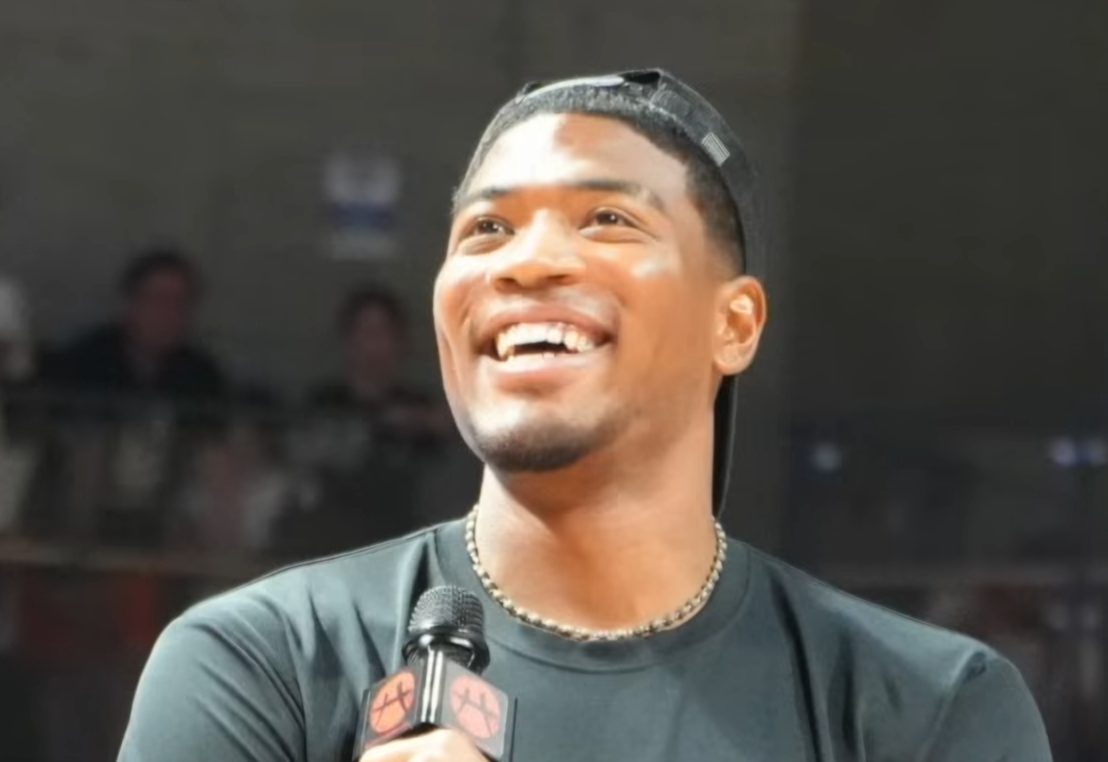
Photo: BuzzFeed Japan, CC BY 4.0, via Wikimedia Commons