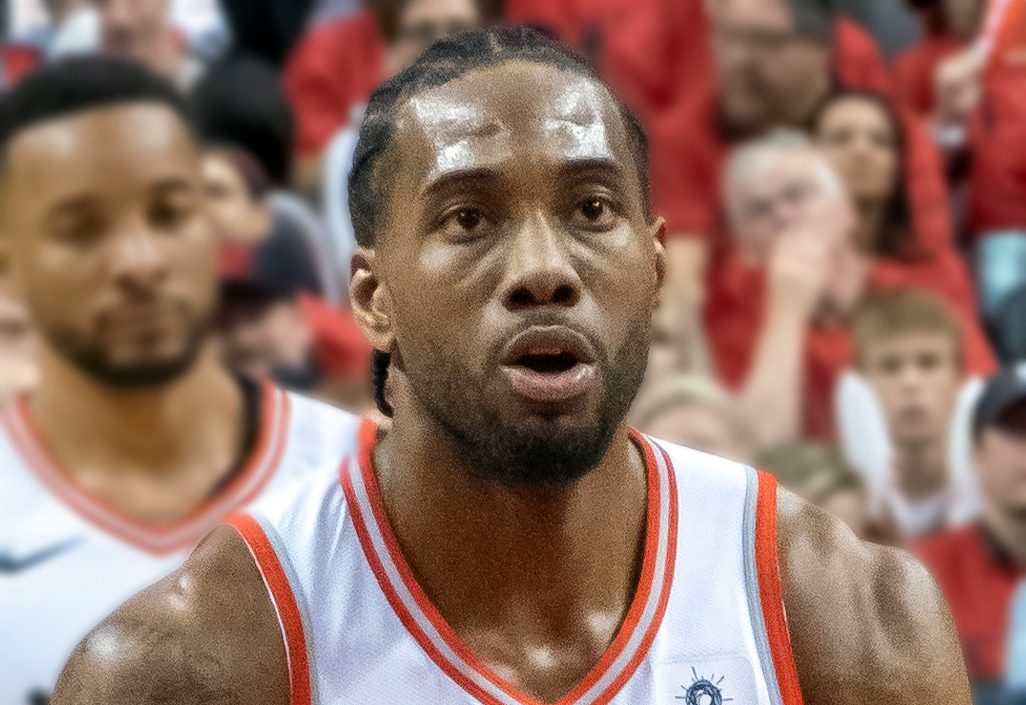
Two Finals MVP trophies. Two championships. Two franchises in two conferences. Kawhi Leonard’s career has never followed the usual superstar script, and that is part of what makes it so easy to trace in sharp, distinct chapters: Riverside gyms, San Diego State, San Antonio’s machine, one unforgettable season in Toronto, then a return home with the Los Angeles Clippers.
What ties it all together is the same player profile that showed up early and never really changed. Leonard built his reputation with defense first, then widened the game around it: huge hands, a long wingspan, strong rebounding for a wing, careful footwork in the midrange, and an ability to control possessions without needing to dominate every one of them.
From Inland Empire gyms to California Mr. Basketball
Kawhi Anthony Leonard was born on June 29, 1991, in Los Angeles, California, and grew up in Southern California with his mother, Kim Robertson, and four older sisters. His father, Mark Leonard, was killed while Kawhi was in high school, a devastating event that sits in the background of his story and helps explain, at least in part, the privacy that has long defined his public image.
Before the NBA knew him as a quiet star, he was a serious high school prospect in the Inland Empire. Leonard attended Canyon Springs High School in Moreno Valley before transferring to Martin Luther King High School in Riverside. There, his game sharpened into something college programs could not miss. As a senior, he averaged 22.6 points, 13.1 rebounds, 3.9 assists and 3.0 blocks per game and was named California Mr. Basketball.
Even then, the outline was familiar. He was not a flashy scorer hunting attention. He was a strong, physical wing who defended, rebounded, finished through contact and kept improving.
San Diego State gave him the stage
Leonard stayed close to home for college and spent two seasons at San Diego State from 2009 to 2011. Those years were short, but they mattered.
As a freshman, he helped the Aztecs win the Mountain West tournament and earned Mountain West Freshman of the Year, first-team all-conference honors and tournament MVP. He averaged 12.7 points and 9.9 rebounds, numbers that already hinted at the kind of wing rebounder he would become in the NBA.
His sophomore season pushed him into the national conversation. Leonard averaged 15.5 points and 10.6 rebounds, was named a consensus second-team All-American, and helped lead San Diego State to a 34-3 record and the Sweet 16. The scoring was growing, but the more telling detail was how complete his game already looked. He defended multiple positions, attacked the glass, and played with a calm that coaches trust in March.
San Diego State later retired his No. 15 jersey, making him the first men’s player in program history to receive that honor.
Draft night changed the direction
The 2011 NBA Draft began with the Indiana Pacers selecting Leonard with the 15th overall pick. It did not end with him in Indiana. He was traded that night to the San Antonio Spurs in a deal that sent George Hill to the Pacers.
That trade placed him in exactly the kind of environment that could turn promise into precision. San Antonio already had Tim Duncan, Tony Parker and Manu Ginóbili, and the Spurs did not need Leonard to be a star on day one. They needed him to defend, run the floor, rebound and make the right play. He did all of that quickly enough to earn NBA All-Rookie First Team honors in 2012.
By his second and third seasons, he was no longer just a useful young wing in a veteran system. He was becoming one of the league’s best perimeter defenders.
The Spurs years: defense first, then everything else
Leonard’s first championship came in 2014, when San Antonio beat Miami in five games in the NBA Finals. He averaged 17.8 points and 6.4 rebounds in that series and won Finals MVP, a remarkable jump for a player who had entered the league as a defense-first prospect.
That award did not come from volume scoring alone. It came from the full package: disciplined defense, timely offense, efficient shooting and a steady presence in the biggest games of the season.
The next step was individual dominance. Leonard won NBA Defensive Player of the Year in 2015 and again in 2016, becoming one of the rare wings to anchor elite team defense year after year. He also made All-Defensive First Team in 2015, 2016 and 2017 after landing on the second team in 2014.
What changed most in San Antonio, though, was his offense. The Spurs gradually handed him more responsibility, and he answered by becoming a primary scorer without losing the economy that made him so effective. In 2015-16, he averaged 21.2 points per game. In 2016-17, that climbed to 25.5 points, along with 5.8 rebounds and 3.5 assists, and he finished third in MVP voting.
By then, Leonard was not simply a great defender who could score. He was one of the league’s best two-way players, period. He made All-NBA First Team in both 2016 and 2017, and his game had developed into a difficult blend to guard: patient post work, strong drives, midrange pull-ups and almost no wasted motion.
His Spurs tenure ended awkwardly. A quadriceps injury limited him to nine games in 2017-18, and the breakdown between Leonard’s camp and the organization became one of the league’s biggest stories. The broad facts are established: he missed most of the season, tension grew over his recovery, and San Antonio traded him in the summer of 2018. Beyond that, speculation has often outrun what was publicly confirmed.
One season in Toronto, one title that lasted
Some stars need years to leave a mark on a franchise. Leonard needed one season in Toronto.
The Raptors acquired him in July 2018, and the move carried obvious risk. He was coming off an injury-shortened year, and there was no guarantee he would stay beyond one season. What Toronto got instead was one of the great short-term title runs in modern NBA history.
Leonard averaged 26.6 points, 7.3 rebounds and 3.3 assists in the regular season, then elevated in the playoffs. The signature moment came in Game 7 against Philadelphia, when his high-bouncing corner jumper at the buzzer became the first Game 7 series-winning shot in NBA history. It remains one of the defining images of the era.
From there, Toronto beat Milwaukee in the Eastern Conference finals and then defeated Golden State for the 2019 NBA championship. Leonard averaged 28.5 points during that postseason and scored 732 total playoff points, one of the highest single-postseason totals in league history. He won Finals MVP for the second time, becoming the first player to earn the award with teams from both conferences.
His Raptors stay lasted only one year, but it permanently changed the franchise and deepened his own résumé.
Homecoming with the Clippers
When Leonard entered free agency in 2019, the next step was less about novelty and more about geography. He went home.
He signed with the Los Angeles Clippers in July 2019, and the move quickly became even bigger when the team also landed Paul George. Leonard’s first Clippers season brought 27.1 points, 7.1 rebounds and 4.9 assists per game, plus the 2020 All-Star Game MVP award. He remained an All-NBA level player and one of the league’s most efficient high-usage scorers.
The years that followed were productive but interrupted. In the 2021 playoffs, he was brilliant again before a knee injury ended his postseason during the Clippers’ run to the Western Conference finals, the deepest playoff push in franchise history. He missed the entire 2021-22 season while recovering from a torn ACL.
When healthy, the level remained familiar. Leonard made All-NBA First Team in 2021 and returned to All-NBA Second Team in 2024. He was also named to the NBA 75th Anniversary Team, recognition of how much he had already accomplished: titles, Finals MVPs, Defensive Player of the Year awards, and a long run as one of basketball’s most reliable postseason performers.
Contract details around star players are usually reported rather than announced in full by the players themselves, and Leonard’s deals with the Clippers were no exception. He signed his initial free-agent contract with the team in 2019, re-signed in 2021, and agreed to another extension in January 2024. Reported figures placed that 2024 extension at three years and roughly $149.5 million.
Team USA and limited international play
Leonard’s national-team résumé is thinner than that of some stars of his generation, but he was regularly in the picture. He was a finalist for Olympic rosters and was selected to Team USA’s pool more than once.
He was initially part of the U.S. team setup ahead of the Paris Olympics, but USA Basketball announced that he would not play, describing the decision as one made in conjunction with the Clippers and Leonard’s representatives. That left his senior national-team record notable more for selection than for tournament minutes.
Why his game has always stood out
The measurements help explain the nickname. Leonard’s wingspan has been listed around 7-foot-3, and his hand size became famous early in his career, leading to “The Klaw.” But the nickname only tells part of the story.
What made him special was how those tools translated into habits. He strips ballhandlers without gambling wildly. He absorbs contact on drives. He gets to his spots in the midrange and rarely looks rushed once he arrives. At his best, he can defend the opponent’s top wing scorer and then carry a half-court offense on the other end.
There is also a stylistic restraint to his game that fits his personality. No extra dribbles. No need to turn every possession into a statement. Leonard has often looked most comfortable deciding a game quietly, one strong defensive stand or one elbow jumper at a time.
Off the court: private by design
Few NBA stars have guarded their private life as carefully as Leonard. He has long kept a low public profile, rarely offering much beyond the basics in interviews, and that reserve has become part of how he is perceived. “Fun Guy,” the nickname that grew out of an awkwardly memorable interview moment, stuck precisely because it contrasted with that image.
Factually, the public record on his personal life is limited. He has spoken about family at times, and reports have identified him as being in a long-term relationship, but Leonard himself has generally kept those details out of the spotlight. That makes restraint important here: broad descriptions of his privacy are fair; claims beyond well-reported basics are not.
His endorsement portfolio has included a major deal with New Balance, a fitting match for a player whose brand has never depended on constant visibility.
There have also been published reports about league scrutiny involving business arrangements connected to the Clippers and outside companies. Those matters should be described carefully. Reported allegations, including claims discussed by Pablo Torre and Meadowlark Media about sponsorship-related arrangements, remain allegations unless and until established by official findings. Public reporting has at times mentioned possible league penalties, but unproven claims should not be treated as fact.
The shape of Kawhi Leonard’s legacy
Strip away the mystery around the personality and the basketball record is still unusually clear.
Leonard won NBA championships with San Antonio in 2014 and Toronto in 2019. He won Finals MVP both times. He was Defensive Player of the Year in 2015 and 2016. He made multiple All-NBA teams, multiple All-Defensive teams and earned repeated All-Star selections. At his peak, he was one of the few players in the league who could be the best defender in a series and the most dependable scorer in it too.
That is a rare career. Not loud, not linear, and not especially interested in explaining itself.
FAQ
How many NBA championships has Kawhi Leonard won?
He has won two: one with the San Antonio Spurs in 2014 and one with the Toronto Raptors in 2019.
Why is Kawhi Leonard called The Klaw?
The nickname comes from his unusually large hands and the way he uses them on defense to disrupt dribbles, passes and shots.
What college did Kawhi Leonard attend?
He played two seasons at San Diego State from 2009 to 2011.
Did Kawhi Leonard win Finals MVP twice?
Yes. He won Finals MVP in 2014 with the Spurs and again in 2019 with the Raptors.
What position does Kawhi Leonard play?
He is primarily a small forward, though he has also played shooting guard.
What team does Kawhi Leonard play for?
He plays for the Los Angeles Clippers.
Photo: Chensiyuan, CC BY-SA 4.0, via Wikimedia Commons