Four championships, two MVP awards, and the NBA’s all-time three-point record tell most of the story. The rest is in the details: the quick release, the constant motion, the calm at the line, and the way Stephen Curry turned shots that once felt reckless into standard offense across the sport.
Born Wardell Stephen Curry II on March 14, 1988, in Akron, Ohio, Curry grew into far more than a star point guard for the Golden State Warriors. He became the player most closely associated with basketball’s long-range revolution, while building one of the most decorated careers of his era.
Early life: an NBA family, and a less obvious path
Basketball was around him from the beginning. His father, Dell Curry, played 16 seasons in the NBA, and his mother, Sonya Curry, later became known as an educator and author. His younger brother Seth also reached the league, giving the family an unusually deep basketball lineage.
Part of Curry’s childhood unfolded in Canada while Dell played for the Toronto Raptors. There, Stephen attended Queensway Christian College and starred on the school team, helping lead it to an undefeated season. When the family returned to North Carolina, he enrolled at Charlotte Christian School.
Even with that background, his rise was not smooth or inevitable. He was skilled, but recruiters saw a slight guard without ideal size for a major college program. Bigger schools hesitated. The skepticism followed him through high school and shaped the next stage of his career.
Davidson: where the scoring reputation took off
Davidson College offered the chance others did not, and Curry used it quickly.
As a freshman in 2006-07, he averaged 21.5 points per game and set the NCAA freshman record for three-pointers made in a season with 122 at the time. He announced himself nationally in the 2007 NCAA tournament, scoring 30 against Gonzaga, 30 against Georgetown, and 33 against Wisconsin as Davidson made an unexpected run to the Elite Eight.
That tournament run changed how he was viewed, but it did not come out of nowhere. By his sophomore season, Curry was already one of the most dangerous scorers in college basketball. In 2007-08, he averaged 25.9 points and made 162 threes, setting the NCAA single-season record then. In his junior year, he led Division I scoring at 28.6 points per game while also shifting more often into a lead-guard role.
His college résumé was loaded in only three seasons: two Southern Conference Player of the Year awards, consensus first-team All-American honors in 2009, and Davidson and Southern Conference scoring records. More important for his future, his game already looked unusual. He could shoot off the dribble, off movement, from well beyond the line, and under heavy pressure. Defenses had to stretch farther than they were used to stretching.
The 2009 draft and an early Warriors gamble
Golden State selected Curry with the seventh pick in the 2009 NBA Draft. At the time, he was seen as a gifted shooter and scorer, though not everyone agreed on whether he would become a full-time NBA point guard.
He made an immediate impact. As a rookie in 2009-10, he averaged 17.5 points, 5.9 assists and 4.5 rebounds, finishing second in Rookie of the Year voting and earning All-Rookie First Team honors. A year later, he won the NBA Skills Challenge, a small but fitting marker for a player whose handle and touch were central to everything he did.
The early years were promising but not seamless. Ankle injuries disrupted parts of his first few seasons and raised real questions about durability. In that context, the four-year, $44 million extension he signed in October 2012 looked reasonable rather than transformative. Later, it became one of the league’s great value contracts, giving the Warriors flexibility as they built a contender around him.
From rising guard to the center of a dynasty
The breakthrough came in stages.
Under coach Mark Jackson, and later Steve Kerr, Golden State sharpened into a team built around spacing, pace and Curry’s shooting gravity. By 2014-15, he was no longer simply an All-Star guard. He was the engine of the league’s most dangerous offense.
That season, Curry won his first MVP award and led the Warriors to the 2015 NBA championship, the franchise’s first title since 1975. He averaged 23.8 points in the regular season, made 286 threes, and became the face of a team that played with speed and freedom but also with structure. He won the Three-Point Contest that same year and made All-NBA First Team.
Then came 2015-16, one of the defining regular seasons in league history. Curry averaged 30.1 points, won the scoring title, led the NBA in steals at 2.1 per game, and hit 402 three-pointers, still the single-season record. He became the first unanimous MVP in NBA history. Golden State won 73 games, breaking the previous record of 72 set by the 1995-96 Bulls.
The Warriors did not finish that season with a title, losing the 2016 Finals to Cleveland after leading the series 3-1, but Curry’s broader impact was already clear. He had changed shot selection at every level of the game. Pull-up threes in transition, once discouraged, became a weapon teams now actively teach.
More titles, more records, and a different kind of pressure
Golden State returned to the top in 2017 and 2018, winning back-to-back championships. Those teams were loaded, but Curry remained essential to their shape and rhythm. His movement without the ball, willingness to give it up and relocate, and constant threat from deep made the entire system work.
By then, his individual honors had piled up as well. He earned repeated All-NBA selections, annual All-Star recognition, and continued to lead the league in made threes. He also won the NBA Sportsmanship Award in 2011 and was named AP Athlete of the Year in 2015.
Not every season was clean. Injuries interrupted stretches of his prime, and the Warriors’ run eventually hit turbulence. But even when Golden State was no longer rolling through the league, Curry’s scoring remained elite. In 2020-21, he won a second scoring title at 32.0 points per game and claimed another Three-Point Contest crown.
On December 14, 2021, he passed Ray Allen to become the NBA’s all-time leader in three-pointers made, a record that had long felt inevitable but still landed as a major league moment.
The 2022 championship and the missing Finals MVP
His fourth title may have been the most personally significant.
In 2022, the Warriors returned to the top by beating Boston in the NBA Finals, and Curry was the clear centerpiece of the run. He averaged 31.2 points in the series and delivered one of the signature performances of his career in Game 4, scoring 43 points on the road with Golden State down 2-1 in the series.
That championship brought him the one major award missing from his résumé: NBA Finals MVP. He also won the inaugural Western Conference Finals MVP that postseason. For a player whose legacy was already secure, it still mattered. The title answered a line of criticism that had lingered around him despite everything else he had already done.
Career numbers and what makes them matter
Curry’s statistics are unusually strong even before context is added. He became the NBA’s all-time leader in three-pointers made and owns the highest free-throw percentage in league history at .912. He has led the league in made threes eight times, won two scoring titles, and earned a place on the NBA 75th Anniversary Team.
His career scoring average has remained in the mid-20s while pairing volume with efficiency that is rare for a high-usage perimeter player. The numbers matter, but they do not fully capture the pressure he creates. Defenders pick him up far from the basket. Big men get dragged into space. Help defenders hesitate. Entire schemes bend around his range.
That is the core of Stephen Curry stats in any serious discussion: not just points and percentages, but the way those numbers altered the geometry of the floor.
Contracts, business interests, and the scale of his brand
Curry has spent his entire NBA career with the Warriors, which is increasingly rare for a player of his stature. In August 2021, he signed a four-year, $215 million extension with Golden State. He later agreed to another one-year extension in 2024.
Off the court, his business profile has expanded steadily. He built a long-running partnership with Under Armour, which launched Curry Brand. He also co-founded Unanimous Media, a production company focused on stories around sports, family and faith, and Penny Jar Capital, a venture firm investing in technology and consumer businesses.
Like many celebrity wealth estimates, reported net worth figures vary by outlet and should be treated as estimates rather than fixed fact. Various publications have placed Stephen Curry net worth in the hundreds of millions, driven by salary, endorsements and investments.
USA Basketball and international gold
For much of his prime, Curry’s international résumé was lighter than his NBA one, but it still includes major wins. He helped the United States win FIBA World Cup gold in 2010 and 2014.
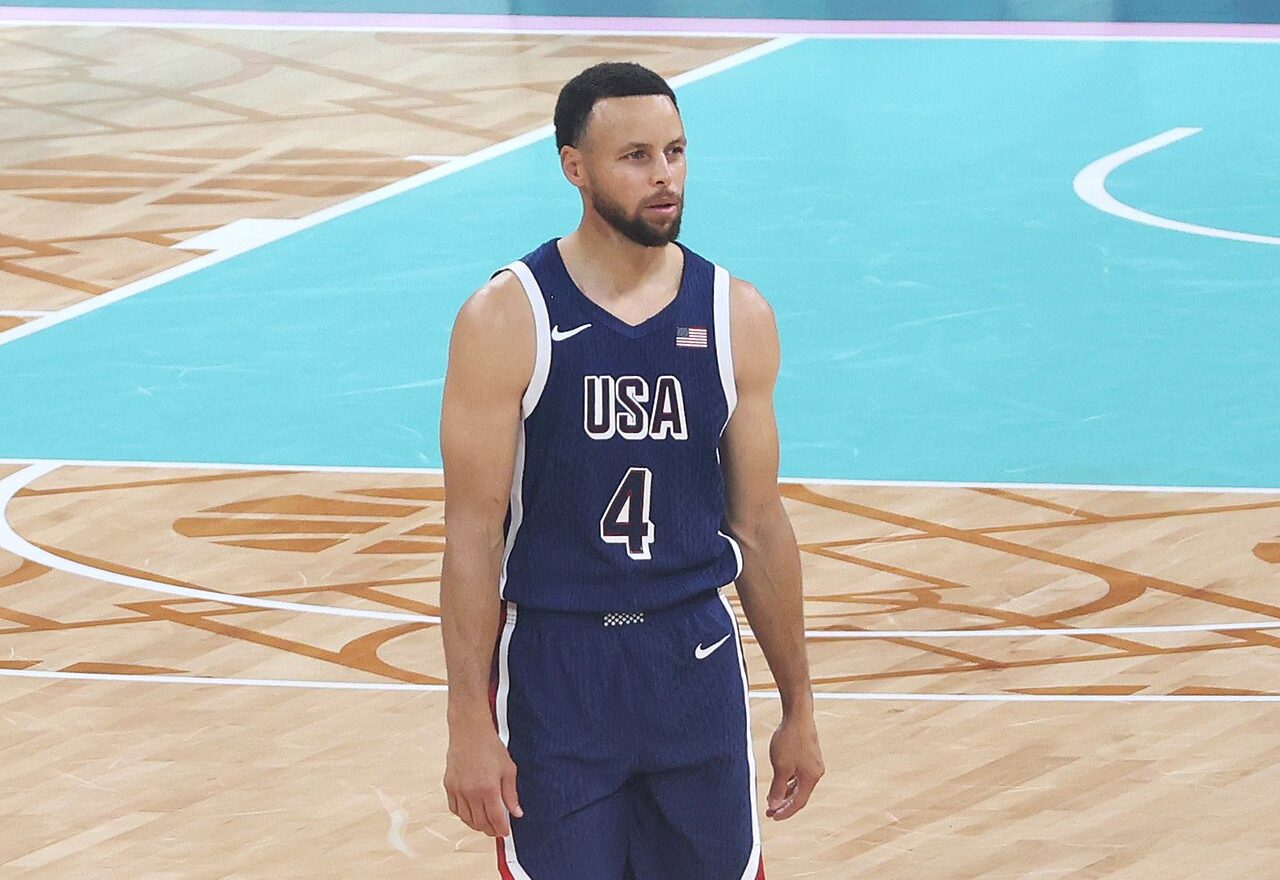
He later added Olympic gold at the Paris Games in 2024, giving him three major senior international gold medals. It filled in one of the few remaining gaps on a career honor roll that was already unusually complete.
Off the court: family, philanthropy, and public life
Away from basketball, Curry’s public image has long been tied to family. He is married to Ayesha Curry, an entrepreneur, author and television personality, and the couple have children together. Because this is public family information they have shared widely, it has remained a visible part of his profile rather than tabloid material.
His philanthropic work has been substantial as well. In 2019, Stephen and Ayesha Curry co-founded the Eat. Learn. Play. Foundation in Oakland. The organization focuses on child nutrition, literacy and safe places for kids to be active. Over time, it has funded school and community projects, distributed meals and books, and become one of the central pieces of Curry’s off-court work.
He has also supported a range of charitable organizations through NBA and community initiatives. That side of his profile fits the larger pattern of his career: broad reach, but usually delivered without much noise.
Real estate and business holdings are often reported in celebrity coverage, though exact details can shift and are not always consistently documented across outlets. What is clear is that Curry’s off-court footprint now stretches well beyond endorsements. He is not only a franchise player but also a media figure, investor and philanthropist.
Playing style and legacy
At 6-foot-2, Curry never fit the old template for a dominant basketball star. He did not overpower defenses physically. He overwhelmed them with timing, accuracy, conditioning and decision-making.
His handle creates just enough separation. His release is quick enough that small windows are enough. His off-ball movement is relentless. And because he can score from so far out, defenders often start possessions already compromised.
That combination is why he is so often described as the greatest shooter the sport has seen. The phrase can sound oversized in other cases; here, the records and the eye test point the same way. Curry did not invent the three-point shot, but he pushed it to the center of modern basketball and made its most audacious version feel repeatable.
FAQ
How many NBA championships has Stephen Curry won?
He has won four NBA titles: 2015, 2017, 2018 and 2022.
Where did Stephen Curry play college basketball?
He played at Davidson College from 2006 to 2009.
What number does Stephen Curry wear?
He wears No. 30 for the Golden State Warriors.
Is Stephen Curry the all-time leader in three-pointers made?
Yes. Curry holds the NBA record for most career three-pointers made.
Who is Stephen Curry married to?
He is married to Ayesha Curry.
What is Stephen Curry’s charity?
He co-founded the Eat. Learn. Play. Foundation with Ayesha Curry in 2019.
Photo: Clément Bardot, CC BY-SA 4.0, via Wikimedia Commons